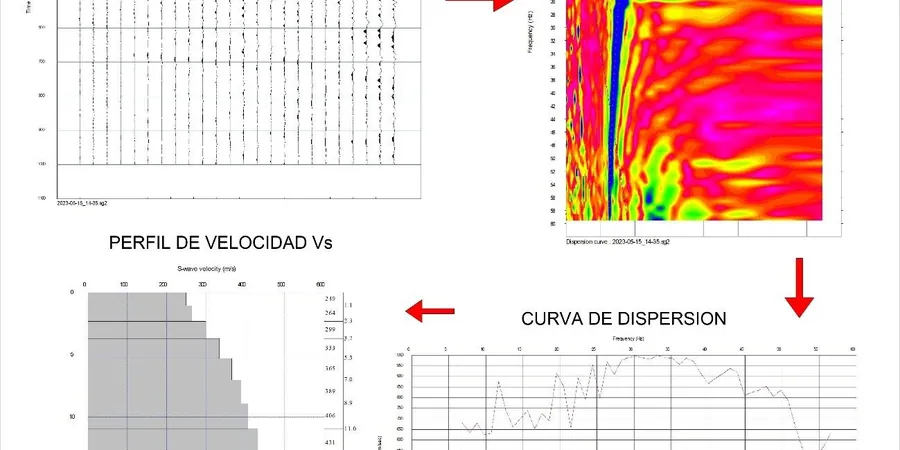
Canterbury's tectonic reality shapes every foundation decision here. Christchurch sits on the edge of the Pacific Ring of Fire, and the 2010–2011 earthquake sequence rewrote the book on local ground behavior. The soft alluvial gravels and silts of the Waimakariri fan can amplify shaking in ways that catch engineers off guard if they rely on generic assumptions. In our lab, we run MASW surveys to measure shear wave velocity directly, giving you a site-specific VS30 value that cuts through the guesswork. Combine this with a CPT probe to ground-truth the stratigraphy, and you get a soil profile that actually reflects what's beneath the pad. We don't do desktop studies. We go to the site, lay out the geophones, and collect data until the dispersion curve is clean enough to invert with confidence. Christchurch requires that level of rigor now, and our equipment is calibrated to deliver it.
VS30 isn't a lookup table value. Christchurch soils are too variable for that. You measure it, or you design blind.