GEOTECHNICAL ENGINEERING1
CHRISTCHURCH
HomeInvestigationCPT (Cone Penetration Test)

CPT Testing for Christchurch Rebuilds and Greenfield Sites

Sound ground. Sound decisions.

LEARN MORE

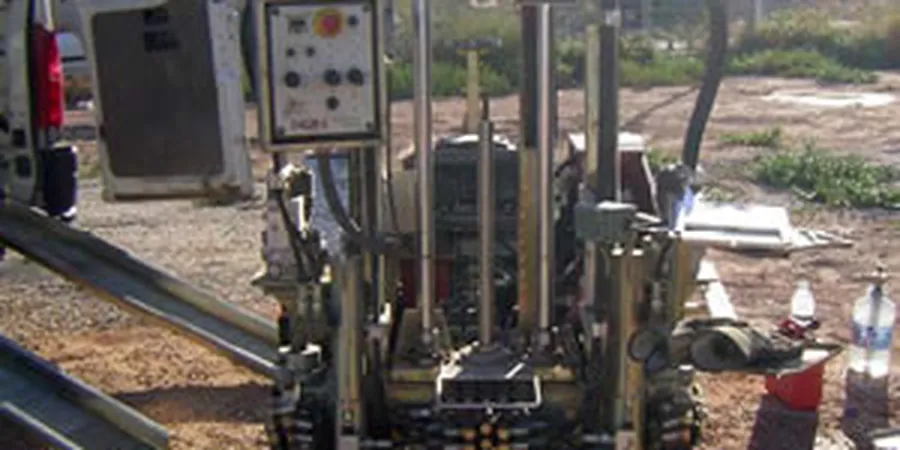
Christchurch sits on a complex alluvial sequence of gravels, sands, and silts overlying the Riccarton Gravel aquifer, a legacy of the Waimakariri River's braided past. The 2010-2011 Canterbury earthquake sequence permanently altered how engineers view the near-surface sediments here. Soft, liquefiable layers between 2 and 10 metres depth are now a primary concern for any structure. CPT (Cone Penetration Testing) cuts through the uncertainty. A 200 kN penetrometer records tip resistance, sleeve friction, and dynamic pore pressure every 10 millimetres, producing a continuous stratigraphic log without sample disturbance. This data feeds directly into liquefaction triggering analyses—specifically the Boulanger & Idriss (2014) CPT-based method—and settlement estimates using Zhang et al. (2002). For deep foundations on the Port Hills fringe, the cone refusal depth on the weathered basalt defines pile termination levels. We run the rig on residential TC3 land, commercial rebuilds in Addington, and infrastructure corridors where MASW Vs profiles complement the CPT for site class determination per NZS 1170.5.

A single CPT sounding replaces three SPT boreholes for liquefaction profiling, delivering a continuous digital log with no sample disturbance.
Our service areas

Methodology and scope

New Zealand Geotechnical Society (NZGS) Module 3 guidelines specify CPT as the preferred investigation tool for liquefaction assessment in Christchurch’s fluvial deposits. The test’s repeatability is critical here: post-quake groundwater levels fluctuate seasonally between 1.5 and 3 metres, and pore pressure dissipation tests during pauses in penetration measure the consolidation coefficient in silts—a parameter that governs settlement rate under foundation loads. Our cone is fitted with a seismic module; shear wave velocity is recorded at 0.5-metre intervals during rod breaks. This yields a paired CPTu-Vs dataset, eliminating the need for separate cross-hole surveys. Data reduction follows the NZGS & MBIE Module 4 framework. Key deliverables include corrected cone resistance (qt), soil behaviour type index (Ic), and cyclic resistance ratio (CRR) profiles. The cone’s 60-degree apex with a 10 cm² base area conforms to ASTM D5778 and is calibrated daily against a reference load cell in our Canterbury lab.
CPT Testing for Christchurch Rebuilds and Greenfield Sites
Technical reference — Christchurch

Local considerations

Christchurch’s population of 390,000 lives on ground that underwent up to 1.0g of peak horizontal acceleration in 2011. A single CPT incorrectly sited, or pushed without pore pressure monitoring, can miss a thin liquefiable silt lens at 6 metres—the same lens that caused thousands of TC3 residential claims. The cone must penetrate the full critical layer sequence. Early refusal on an isolated boulder in the Springston Formation may incorrectly suggest dense bearing strata, leading to under-designed shallow footings. Post-processing errors in the soil behaviour type chart (normalised by Robertson, 1990) can misclassify silty sands as silts, skewing the factor of safety against liquefaction. To mitigate this, each sounding is paired with a nearby borehole or test pit for ground-truthing the upper 3 metres, and dissipation tests are run at every change in soil behaviour type.

Need a geotechnical assessment?

Reply within 24h.

Email: contact@geotechnical-engineering1.co

Applicable standards

ASTM D5778-20: Standard Test Method for Electronic Friction Cone and Piezocone Penetration Testing of Soils, NZS 1170.5:2004 Structural Design Actions – Earthquake Actions – New Zealand, NZGS & MBIE Module 4: Earthquake Geotechnical Engineering Practice (CPT-based liquefaction assessment), Robertson & Wride (1998) / Robertson (2009) Soil Behaviour Type classification, Boulanger & Idriss (2014) CPT-based liquefaction triggering procedure

Technical parameters

ParameterTypical value
Cone typePiezocone (CPTu) with u2 pore pressure transducer
Tip resistance rangeUp to 100 MPa (standard); 150 MPa (hard ground option)
Sleeve friction rangeUp to 5 MPa
Pore pressure capacity3.5 MPa, fast-response filter
Seismic moduleTriaxial geophone, Vs every 0.5 m rod break
Penetration rate20 mm/s ± 5 mm/s (ASTM D5778)
Data interval10 mm continuous digital record
Maximum depth (Christchurch alluvium)Typically 15–30 metres (refusal on gravel)

Frequently asked questions

What does a CPT test cost for a standard Christchurch residential site?

A single CPT sounding to 20 metres depth on a standard TC2 or TC3 residential section in Christchurch typically falls between NZ$300 and NZ$400. The exact cost depends on rig access, the number of dissipation tests required, and whether seismic Vs is recorded. Liquefaction assessment packages with multiple soundings and full reporting are quoted per project.

How long does a CPT take compared to a conventional borehole?

A 20-metre CPTu with four dissipation tests and seismic stops is usually completed in 90 minutes to two hours on a Christchurch alluvial site. The data is available digitally immediately after the push. A conventional SPT borehole to the same depth typically takes half a day and requires lab testing before results are usable. The CPT’s speed is a major advantage for rebuild projects with tight timelines.

Can CPT replace all boreholes on a Christchurch project?

Not entirely. NZGS Module 3 recommends pairing CPT with at least one borehole or test pit per site to verify the soil behaviour type classification and recover samples for Atterberg limits. The cone classifies soil by mechanical response, not by visual description. A ground-truthed borehole at the start of the investigation eliminates misclassification risk, especially in the interbedded silts and sands of the Christchurch Formation.

What depth of CPT is required for a TC3 foundation in Christchurch?

MBIE guidance for TC3 residential foundations generally requires CPT profiling to at least 15 metres, or until cone refusal on competent gravel. The critical liquefiable layers in eastern Christchurch are typically between 2 and 10 metres, but deeper silts exist in some areas. For commercial structures with deep piles, soundings often reach 25 to 30 metres. The exact depth is determined by the site’s location relative to the mapped paleochannels.

Location and service area

We serve projects across Christchurch and its metropolitan area.

View larger map