GEOTECHNICAL ENGINEERING1
CHRISTCHURCH
HomeRoadwayFlexible pavement design

Flexible Pavement Design & Testing in Christchurch

Sound ground. Sound decisions.

LEARN MORE

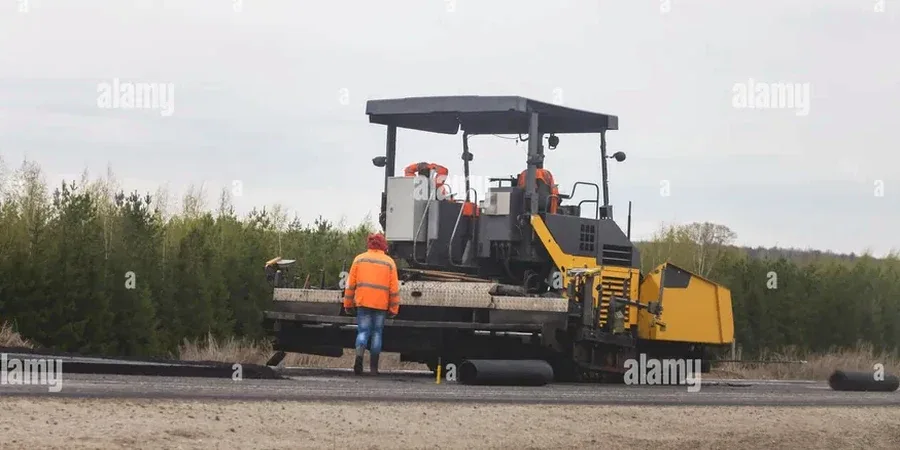
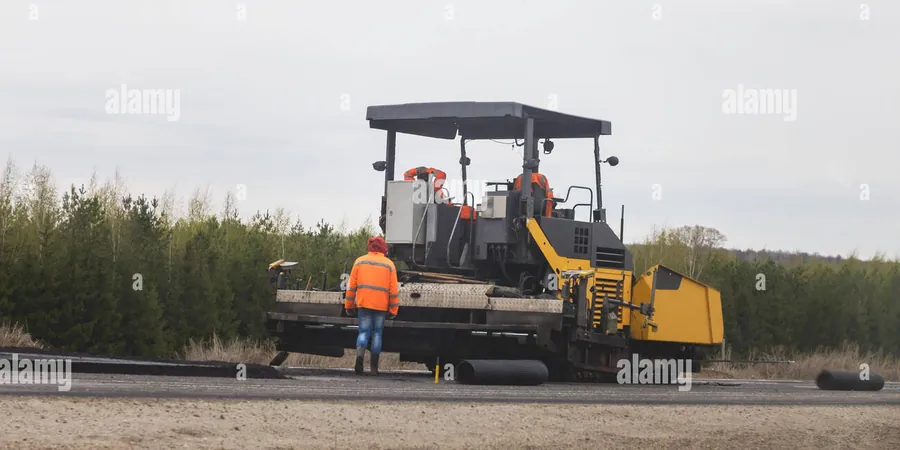
A warehouse extension out near Hornby sat on a subgrade that looked fine in summer but turned to jelly after one heavy rain. The contractor had already placed basecourse on a formation they trusted. We took CBR readings below the stripped level and found soaked strengths under 3%—nowhere near enough for commercial traffic. Flexible pavement design in Christchurch has to account for these abrupt changes in moisture sensitivity across the alluvial plains. We pulled the granular layer back, re-compacted with moisture control, and redesigned the pavement stack using target CBR values from soaked samples. The CBR road testing protocol gives us the soaked strength benchmark, and combined with grain size analysis we can verify that the aggregate interlock will hold when water moves through the basecourse.

A soaked CBR value of 3% on the alluvial silts of Christchurch means you need to either excavate deeper or stabilise—there is no middle ground.
Our service areas

Methodology and scope

The core of our lab work for flexible pavements runs through a California Bearing Ratio frame—a motorised penetration piston loading a 50 mm plunger into a compacted cylindrical specimen inside a soaking tank. The machine follows NZS 4402:1986 methods, recording force versus penetration up to 7.5 mm. We prepare specimens at optimum moisture content from Proctor tests and soak them for four days before loading. The penetration curve tells us how the material will behave under repeated wheel loads. Alongside CBR, we run the sand replacement density test on-site with a cone and tray to check that achieved compaction in each lift meets the spec—typically 95% or 98% of maximum dry density for subbase and basecourse layers respectively.
  • Soaked CBR testing at 2.5 and 5.0 mm penetration
  • Nuclear gauge and sand cone density correlation
  • Particle size distribution by wet sieving
  • Plasticity index determination on fines fraction
Flexible Pavement Design & Testing in Christchurch
Technical reference — Christchurch

Local considerations

We see a pattern in eastern Christchurch suburbs: contractors treat the formation like a generic silty soil, but the liquefaction history has left lenses of loose sand and peat pockets that compact unevenly. When you place a flexible pavement over these without a bridging layer, the first winter rains trigger differential settlement that ripples through the asphalt within six months. The risk is not just rutting—it is a total loss of shape in the crossfall, leading to ponding and accelerated stripping of the bituminous surfacing. Our lab checks moisture condition value (MCV) on the formation and runs repeated load triaxial on basecourse when the traffic forecast exceeds 10⁶ ESA. If the in-situ permeability of the subgrade is below 10⁻⁶ m/s, we recommend a drainage blanket or subsoil drains to prevent saturation of the pavement structure.

Need a geotechnical assessment?

Reply within 24h.

Email: contact@geotechnical-engineering1.co

Applicable standards

NZS 3404:2009 – Steel structures standard (referenced for pavement-related structural interfaces), NZS 4402:1986 – Methods of testing soils for civil engineering purposes (CBR, compaction, Atterberg), NZS 4407:1991 – Methods of sampling and testing road aggregates (grading, crushing resistance), TNZ M/4:2006 – Specification for basecourse aggregate (AP40), NZTA Pavement Design Guide (2018 supplement), ASTM D1556/D1556M-15e1 – Standard test method for density of soil in place by the sand-cone method

Technical parameters

ParameterTypical value
Soaked CBR (subgrade)1.5–5% typical for alluvial silts; target ≥ 3–5% for light traffic
Basecourse CBR (soaked)≥ 80% for TNZ M/4 AP40 specification material
Subbase CBR (soaked)≥ 30% per NZS 3404; often verified at 95% MDD compaction
Maximum dry density (Proctor)Determined per NZS 4402 Test 4.1; target 98% for basecourse layers
Field density (sand cone)ASTM D1556 / NZS 4402 Test 4.8; 95% MDD subbase, 98% MDD basecourse
Plasticity index (Atterberg)≤ 12% for subbase; ≤ 5% for basecourse; tested per NZS 4402 Test 2.3
Grading envelopeTNZ M/4 AP40; NZS 4407 wet sieving after compaction
Design traffic (ESA)Typically 10⁴ to 10⁷ ESAs over 25-year design life per NZTA pavement design guide

Frequently asked questions

What soaked CBR value is typically required for a flexible pavement in Christchurch?

For residential access ways with light traffic, a subgrade CBR of 3–5% at formation level is often accepted, provided the pavement depth compensates. For commercial or arterial roads carrying over 10⁵ ESA, we typically need a minimum soaked CBR of 5–7% below the subbase, or we recommend stabilisation to achieve an equivalent stiffness.

How much does flexible pavement testing and design cost for a typical site in Christchurch?

A full pavement testing and design package for a standard commercial site in Christchurch ranges from NZ$2,920 to NZ$9,060, depending on the number of test locations, depth of investigation, and whether stabilisation mix designs are required.

Do you test to the NZTA Pavement Design Guide requirements?

All our laboratory testing aligns with the NZTA pavement design guide and the supporting New Zealand standards. We report soaked CBR values, grading curves, plasticity indices, and compaction data in a format that feeds directly into mechanistic-empirical design spreadsheets used by consulting engineers.

What is the difference between soaked and unsoaked CBR for pavement design?

Soaked CBR represents the strength of the material after four days of saturation, simulating the worst-case moisture condition under the pavement. Unsoaked CBR reflects as-compacted conditions. In Christchurch, with its shallow groundwater and frequent rain events, we base the design almost exclusively on the soaked value because the subgrade rarely stays dry for the full design life.

Location and service area

We serve projects across Christchurch and its metropolitan area.

View larger map