GEOTECHNICAL ENGINEERING1
CHRISTCHURCH
HomeLaboratoryLaboratory CBR test

Laboratory CBR Testing for Christchurch Pavement Design

Sound ground. Sound decisions.

LEARN MORE

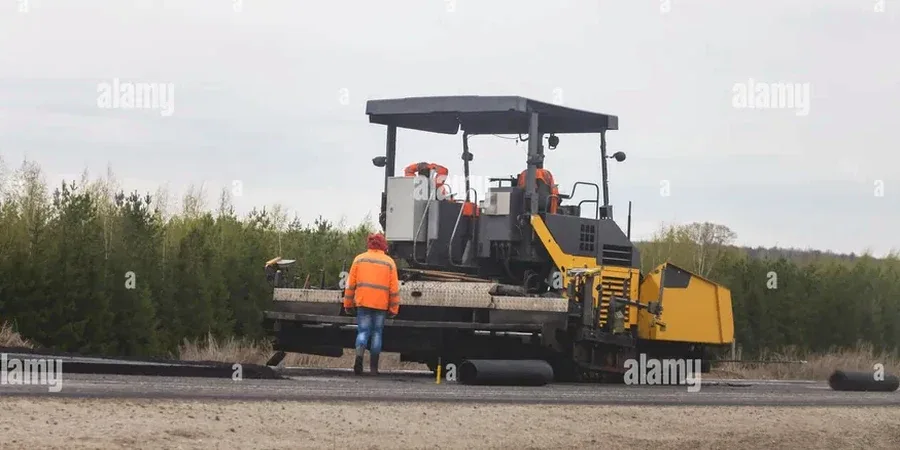
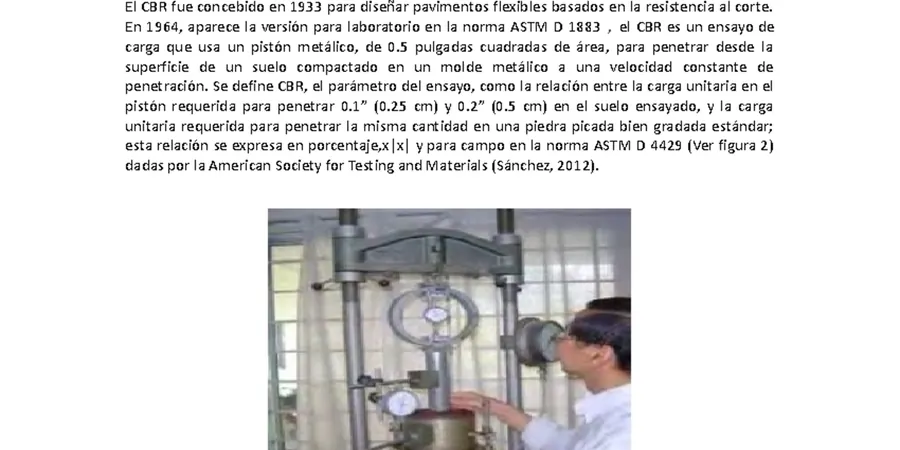
A contractor out in Rolleston was prepping a new industrial subdivision when the pavement spec came back with a soaked CBR of 5% — half of what he’d budgeted for. It’s a classic Christchurch scenario. The top gravels look solid, but the underlying silts and fine sands, often saturated by the region’s shallow groundwater, tell a different story once compacted and soaked in the lab. The laboratory CBR test measures exactly that: the bearing strength of subgrade and basecourse materials under controlled moisture and density — using the NZS 3404 4-day soak method as the default, with NZS 4203 and NZGS guidelines shaping the interpretation. Because Christchurch sits on a mosaic of river terraces, alluvial fans, and post-quake reworked ground, a single on-site DCP won’t give you the full picture. We run the test at our ISO 17025-accredited facility, pairing it with a Proctor compaction curve so the CBR is tied to a known dry density, and often complement the soak phase with a grain size analysis to flag fines content before it catches the design engineer off guard.

A soaked CBR of 3% versus 8% on the same site can mean the difference between 150 mm and 250 mm of aggregate basecourse — that’s real money in Christchurch subdivision earthworks.
Our service areas

Methodology and scope

NZS 3404:2009 governs the soaked CBR procedure, but good practice in Christchurch demands more than just ticking the box. The city’s eastern suburbs and Halswell corridor frequently encounter moisture-sensitive loess-derived silts — material that can lose 40% of its CBR value between the unsoaked and 4-day soak stages. Our protocol runs both measurements: unsoaked CBR at the target compaction moisture, then soaked CBR after full saturation, with swell recorded every 24 hours. The laboratory CBR test in Canterbury becomes particularly relevant when dealing with imported granular fills from Waimakariri River sources, where crushed alluvial greywacke can deliver CBR values above 80% at 98% MDD, yet the same material blended with just 15% fines drops below 30%. We see this pattern repeatedly across subdivisions in Prestons, Marshland, and Rolleston. For heavy-duty flexible pavements, the soaked CBR at 2.5 mm and 5.0 mm penetration is correlated against the NZTA pavement design chart, while rigid pavement projects use the CBR-derived modulus of subgrade reaction. When the subgrade is marginal, the results feed directly into the decision to stabilize or over-excavate — and in liquefaction-prone zones, the pre-construction soaked CBR often becomes the baseline for post-improvement verification after stone column installation or deep dynamic compaction.
Laboratory CBR Testing for Christchurch Pavement Design
Technical reference — Christchurch

Local considerations

Time and again we see pavement designs in Christchurch based on assumed CBR values from regional lookup tables — and time and again those assumptions cost six figures in remedial work. The issue is spatial variability. A site near the Avon River can swing from CBR 2% in the swampy deposits to 12% on the dry terrace edge, sometimes within 30 metres. The laboratory CBR test eliminates that guesswork by testing the actual material at the specified density and moisture, but the risk is in the sampling: a bag sample taken from the top 200 mm won’t capture the weak layer at 600 mm depth. We insist on representative sampling from each distinct soil horizon, and when the subgrade is variable, we recommend triplicate specimens to bracket the uncertainty. In post-earthquake Christchurch, another risk is compaction-induced collapse in loessial soils — the CBR test alone won’t predict it, but paired with a measured swell percentage and a critical review of the moisture-density relationship, the lab data provides a solid go/no-go decision point before trucks start hauling aggregate.

Need a geotechnical assessment?

Reply within 24h.

Email: contact@geotechnical-engineering1.co

Applicable standards

NZS 3404:2009 – Soaked CBR of soils and aggregates, NZS 4203:1992 – General structural design (superseded but still referenced in legacy specs), NZS 4402 Test 4.1 – Standard Proctor compaction, ASTM D1883-21 – Standard Test Method for California Bearing Ratio, NZTA M/3 and NZTA B/2 – Pavement design and basecourse specifications

Technical parameters

ParameterTypical value
Standard followedNZS 3404:2009 (soaked), NZS 4203, ASTM D1883
Compactive effortStandard Proctor (NZS 4402 Test 4.1) or Modified Proctor per spec
Soaking period4 days (96 hours) under water with swell measurement
Penetration piston49.6 mm diameter (standard), rate 1.27 mm/min
Penetrations recorded0.63, 1.25, 2.0, 2.5, 3.75, 5.0, 7.5, 10.0, 12.5 mm
Typical Christchurch subgrade CBR (soaked)3–8% for silty alluvium; >30% for well-graded gravels
Surcharge appliedEquivalent to pavement weight (typically 4.5 kg annular surcharge)
AccreditationISO 17025 / IANZ scope for soil strength testing

Frequently asked questions

How much does a laboratory CBR test cost in Christchurch?

A standard 3-point soaked CBR test (three compaction points, plus Proctor curve) typically runs between NZ$200 and NZ$330 per specimen, depending on whether it's a single-point or full 5-point curve and whether swell monitoring is required. Bulk rates apply for subdivision work with 10+ specimens.

What is the difference between soaked and unsoaked CBR, and which one does Christchurch Council require?

Unsoaked CBR measures strength at the compaction moisture content, while soaked CBR simulates long-term saturation after rain and groundwater rise — the 4-day soak per NZS 3404. Christchurch City Council and NZTA pavement design both require the soaked CBR as the design value because the Canterbury Plains have shallow groundwater and the subgrade will eventually reach near-saturated conditions.

How long does the CBR test take from sample delivery to report?

The full soaked CBR cycle takes 7 working days: 1 day for compaction and specimen preparation, 4 days for the soak with daily swell readings, 1 day for penetration testing and data reduction, and 1 day for QA review and reporting. Unsoaked CBR can be turned around in 3 working days when time is critical.

What CBR value is considered acceptable for residential driveways and light-duty pavements in Christchurch?

For residential driveways and light-traffic access ways, Christchurch engineers typically target a soaked CBR of at least 5% at 95% MDD on the subgrade. Values below 3% generally require either subgrade replacement (over-excavation to 300–500 mm and backfill with AP40 or AP65) or lime/cement stabilisation. For heavy commercial pavements, the design soaked CBR should exceed 10% on the subgrade.

Can you test aggregate basecourse with the CBR method, or is it only for subgrade soils?

Yes, the laboratory CBR test is standard for both subgrade soils and granular basecourse materials — NZTA M/3 basecourse typically delivers soaked CBR values above 80% at 98% MDD. The test uses a larger surcharge weight when testing basecourse to simulate the confining pressure from overlying pavement layers, and we run the penetration at the specified field density rather than at a range of compaction points.

Location and service area

We serve projects across Christchurch and its metropolitan area.

View larger map