GEOTECHNICAL ENGINEERING1
CHRISTCHURCH
HomeLaboratoryProctor test (Standard or Modified)

Proctor Compaction Testing in Christchurch: Standard and Modified Methods

Sound ground. Sound decisions.

LEARN MORE

A mechanical rammer dropping from a calibrated height onto soil inside a steel mould is the core of every Proctor test performed across Christchurch. The Canterbury plains present a unique mix of alluvial silts, fine sands, and gravel lenses deposited by the Waimakariri River, and the 2010–2011 earthquake sequence remoulded near-surface strata in ways that still affect compaction behaviour today. The lab runs both the standard effort (595 kJ/m³) and the modified effort (2,693 kJ/m³) using 4.5 kg or 10 kg hammers, depending on whether the spec calls for residential fill, road subgrade, or structural backfill behind a retaining wall. Before a roller hits the lift, the sand cone density method is often paired with the Proctor curve to verify field compaction on site. Each result ties back to NZS 4402:1986 and ASTM D698/D1557, ensuring the numbers hold up under council review.

A well-defined Proctor curve in Christchurch silts is the difference between a pavement that lasts twenty years and one that rutted after the first wet winter.
Our service areas

Methodology and scope

Christchurch sits at just 20 metres above sea level on average, and much of the eastern suburbs rest on loose fluvial deposits with high liquefaction susceptibility; this geology makes moisture control during compaction non-negotiable. The lab processes material passing the 37.5 mm sieve, corrects for oversize particles when gravel content exceeds 20%, and plots the full moisture–density parabola to pinpoint the peak. For structural fill beneath footings in the TC3 technical category, the modified Proctor is standard, while the standard Proctor often applies to landscape bunds and low-load areas. The curve also feeds directly into specifications for retaining walls where backfill compaction must limit lateral pressure without sacrificing density. Technicians oven-dry samples at 105°C, run at least five moisture points, and reject curves that don't show a clear optimum, because a flat curve in Christchurch silts usually signals variable layering.
Proctor Compaction Testing in Christchurch: Standard and Modified Methods
Technical reference — Christchurch

Local considerations

A common mistake on Christchurch rebuild projects is assuming the borrow pit material matches the lab curve from three months earlier. The alluvial deposits change laterally over short distances; a stockpile can shift from sandy silt to silty gravel in under fifty metres. Contractors who skip a fresh Proctor on the changed material end up with a density reference that doesn't represent what is actually being compacted. The field crew then chases a dry density target that is either impossible to reach or dangerously low, and the nuclear gauge or sand cone readings become meaningless. Worse, over-compaction of moisture-sensitive silts can create a shattered surface that looks dense but has no strength. The cost of reworking a failed compaction lift on a commercial slab in Addington or Hornby far exceeds the cost of running a new Proctor when the material changes.

Need a geotechnical assessment?

Reply within 24h.

Email: contact@geotechnical-engineering1.co

Explanatory video

Applicable standards

NZS 4402:1986 – Methods of testing soils for civil engineering purposes, ASTM D698 – Standard Proctor (standard effort), ASTM D1557 – Modified Proctor (modified effort), NZS 3404:1997 – Steel structures (referenced for compaction behind abutments), NZSGS guidelines – Soil description and compaction acceptance

Technical parameters

ParameterTypical value
Standard Proctor energy595 kJ/m³ (4.5 kg hammer, 305 mm drop)
Modified Proctor energy2,693 kJ/m³ (10 kg hammer, 457 mm drop)
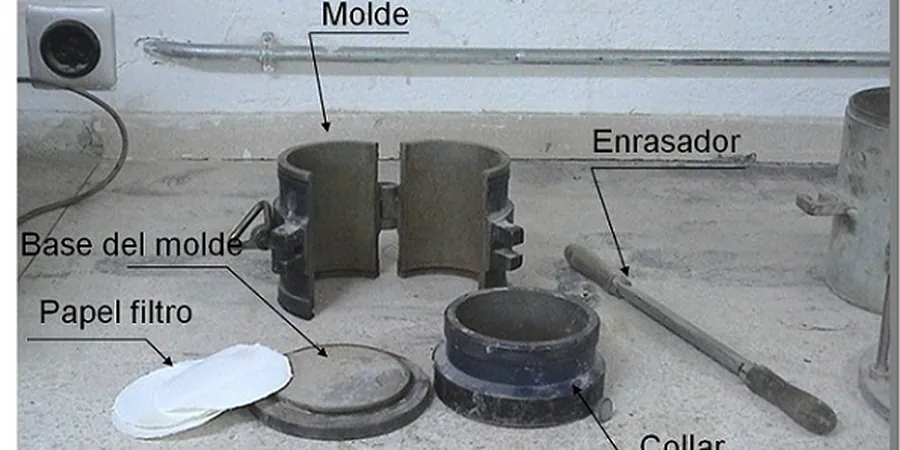
Mould volume944 cm³ (4-inch) or 2,124 cm³ (6-inch)
Maximum particle size37.5 mm (oversize correction applied above 20% retained)
Moisture points per curve5 minimum (typically 6–7 in variable fills)
Applicable standardsNZS 4402:1986, ASTM D698, ASTM D1557

Frequently asked questions

What is the difference between Standard and Modified Proctor, and which one does my Christchurch project need?

Standard Proctor uses a 4.5 kg rammer dropped 305 mm and applies 595 kJ/m³ of energy; it simulates compaction achievable with light rollers or plate compactors. Modified Proctor uses a 10 kg rammer dropped 457 mm, delivering 2,693 kJ/m³ to replicate heavy vibratory rollers. For residential driveways and landscape fill on TC1 land, Standard is often accepted. Structural fill, road subgrade, and any work on TC2 or TC3 land almost always requires Modified Proctor per Christchurch City Council's engineering acceptance criteria.

How much does a Proctor compaction test cost in Christchurch?

A single-point Standard Proctor typically runs between NZ$160 and NZ$220, while a full Modified Proctor curve with five moisture points ranges from NZ$260 to NZ$370, depending on turnaround time and whether oversize correction is needed. Rush jobs and after-hours processing carry a surcharge.

How long does it take to get Proctor test results back?

Standard turnaround is three to four working days from sample receipt. Oven drying, sieving, and running multiple moisture points takes time because each point must reach equilibrium before compaction. Rush service is available and can deliver results in 24 to 36 hours when the sample arrives early in the day.

What soil types in Christchurch cause problems during Proctor testing?

The silty fine sands common in the eastern suburbs and the variable gravel–silt mixtures found across the Canterbury plains are the main culprits. These soils often show a flat moisture–density curve without a sharp peak, which makes determining the true optimum moisture ambiguous. Our lab runs extra moisture points and sometimes uses the one-point Proctor method as a cross-check when the curve lacks a clear maximum.

Location and service area

We serve projects across Christchurch and its metropolitan area.

View larger map