GEOTECHNICAL ENGINEERING1
CHRISTCHURCH
HomeUnderground ExcavationsGeotechnical analysis for soft soil tunnels

Geotechnical Analysis for Soft Soil Tunnels in Christchurch

Sound ground. Sound decisions.

LEARN MORE

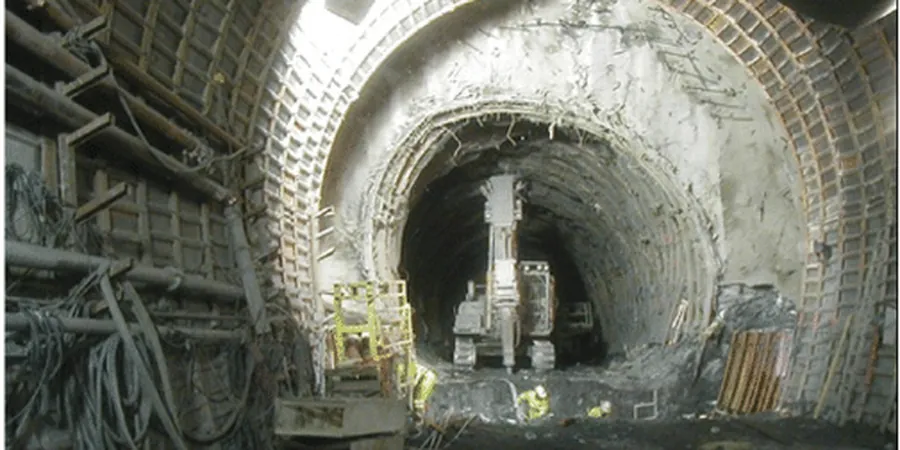
Tunnelling through Christchurch soil is not a routine exercise. The city sits on deep alluvial deposits of the Canterbury Plains, with interbedded gravels, silts, and peats that shift behaviour within metres. A recent cut-and-cover project near the Avon River encountered organic silts at less than 3 m depth, forcing an immediate redesign of the temporary support system. Ground conditions here reflect the region's braided-river history: lenses of high-permeability gravel sit directly beneath compressible estuarine clays. The geotechnical analysis for soft soil tunnels must resolve this layered complexity before a single metre is excavated. We combine in-situ investigation with advanced laboratory testing to characterise stiffness, strength, and pore-pressure response under unloading. In the CBD, where the water table often lies within 1.5 m of the surface, the excavation monitoring programme becomes the tunnel engineer's primary risk-control tool, feeding real-time data back to the ground model.

Christchurch alluvium can lose over half its peak shear strength under cyclic loading—tunnel face stability demands an effective-stress analysis, not just total-stress.
Our service areas

Methodology and scope

One detail that surprises engineers new to Christchurch is how rapidly undrained shear strength degrades when sensitive silts are disturbed. In the eastern suburbs, post-quake investigations revealed that apparently stiff loess-derived soils lost over 60 percent of their peak strength under cyclic shearing. The geotechnical analysis for soft soil tunnels must therefore go beyond classical bearing-capacity checks. We run consolidated-undrained triaxial tests with pore-pressure measurement to define the effective stress path from in-situ conditions to tunnel face unloading. Stiffness degradation curves from resonant column tests help predict settlement trough width—critical where the alignment passes beneath heritage masonry. When the geology transitions from Riccarton Gravel into Christchurch Formation sands, the liquefaction assessment directly governs the choice of face pressure for an EPB machine. Our laboratory also performs oedometer tests at loading increments that replicate the overconsolidation history of the local soils, ensuring that the compressibility parameters fed into PLAXIS or FLAC models reflect the true post-glacial stress history of the Canterbury basin.
Geotechnical Analysis for Soft Soil Tunnels in Christchurch
Technical reference — Christchurch

Local considerations

Christchurch's urban fabric bears the signature of two devastating earthquakes, and the 2010-2011 sequence fundamentally changed how the engineering community views ground risk. Liquefaction-induced lateral spreading displaced entire streets in Bexley and Avonside, while deep-seated settlement in the CBD reached 300 mm in some blocks. For a tunnel, the hazard is not just shaking intensity but permanent ground deformation that can impose racking distortion on the lining. The geotechnical analysis for soft soil tunnels in this city must integrate the NZGS seismic design framework with site-specific response spectra derived from seismic microzonation studies. The transition zones between the gravel-dominated western fan and the fine-grained eastern basin are particularly treacherous because impedance contrasts amplify short-period motion. Our team models these effects using equivalent-linear site response analyses, feeding the results into soil-structure interaction assessments that follow NZS 3404 requirements for underground structures in seismic regions.

Need a geotechnical assessment?

Reply within 24h.

Email: contact@geotechnical-engineering1.co

Applicable standards

NZS 3404 (Steel structures standard, seismic provisions for underground works), NZS 4203 (General structural design and design loadings), NZGS guidelines on tunnel design in alluvial soils, ASTM D4767-11 (Consolidated undrained triaxial compression test), ASTM D4015-21 (Resonant column test for modulus and damping)

Technical parameters

ParameterTypical value
Undrained shear strength (su) range12 to 65 kPa in Christchurch Formation silts
Overconsolidation ratio (OCR)1.8 to 4.2 in post-glacial clays
Permeability (k) of Riccarton Gravel1×10⁻³ to 5×10⁻² m/s
Typical groundwater depth, CBD0.8 to 2.0 m below ground surface
Plasticity index of estuarine clays15 to 35%
Soil unit weight16.5 to 20.5 kN/m³ depending on gravel content
Sensitivity (St) of eastern-suburb silts4 to 12
Standard penetration test N-value, shallow alluvium2 to 18 blows/300 mm before gravel refusal

Frequently asked questions

What makes Christchurch soil so difficult for tunnelling?

The city is built on the Canterbury Plains, where braided-river processes deposited alternating layers of gravel, sand, silt, and peat. The water table is shallow—often within a metre of the surface—and the fine-grained soils are sensitive, meaning they lose strength rapidly when disturbed. Post-earthquake investigations showed liquefaction and lateral spreading in many areas, adding seismic deformation to the design loads.

What laboratory tests are essential for a soft-ground tunnel in Christchurch?

A minimum programme includes consolidated-undrained triaxial tests with pore-pressure measurement, oedometer tests to define compressibility and OCR, and classification tests (Atterberg limits, grain size). If the alignment crosses liquefiable sands, we add cyclic triaxial or resonant column tests to calibrate the pore-pressure generation model.

How much does a geotechnical analysis for a soft soil tunnel cost in Christchurch?

The fee depends on the extent of the investigation and the number of laboratory tests required. For a typical Christchurch project, the geotechnical analysis ranges from NZ$6,320 to NZ$30,110, covering in-situ data review, advanced triaxial and oedometer testing, seismic site response, and soil-structure interaction modelling.

How do you account for liquefaction in tunnel design?

We apply the NZGS liquefaction assessment framework using CPT and SPT data to estimate the factor of safety against triggering. For the tunnel lining, we compute post-liquefaction ground deformation (settlement and lateral spread) and impose those displacements as kinematic loads on the structure, following the performance-based approach in NZS 3404.

Location and service area

We serve projects across Christchurch and its metropolitan area.

View larger map