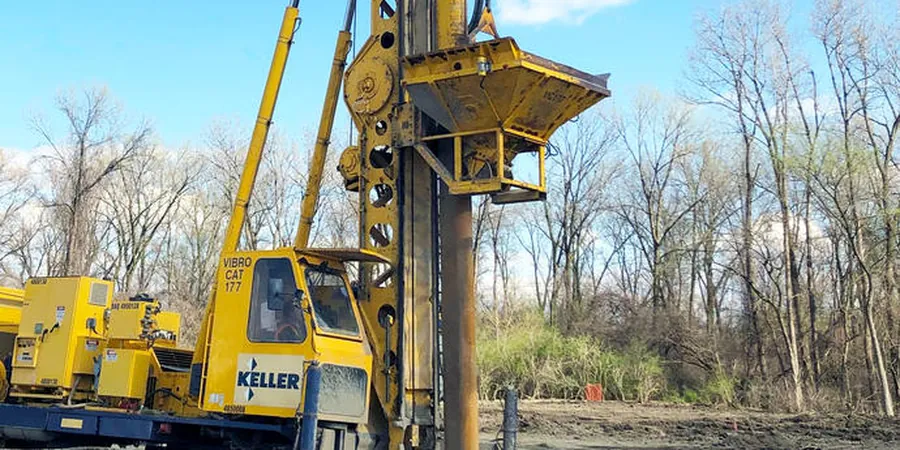
The most expensive mistake a developer makes in Christchurch is assuming a standard foundation will suffice on post-quake alluvial soils. We have seen projects where Vibrocompaction design was treated as an afterthought—only to face differential settlements that cracked slab-on-grade floors within two years of handover. The Canterbury Earthquake Sequence fundamentally changed our understanding of soil behavior across the city; loose fluvial sands and silts in suburbs like Bexley, Kaiapoi, and the central city responded with severe liquefaction that no prescriptive code could have predicted. A properly sequenced CPT testing campaign quantifies the depth and severity of loose layers before any treatment design begins, and when combined with a site-specific liquefaction assessment based on the Boulanger-Idriss methodology, the resulting vibrocompaction grid delivers a quantifiable reduction in excess pore pressure potential. Our design team works backward from the required post-treatment performance criteria—typically less than 25 mm of seismic settlement for residential structures—to define spacing, depth, and energy input that the contractor executes with real-time quality control records.
Post-treatment CPT verification in Christchurch's eastern suburbs consistently shows a 35% to 50% increase in tip resistance within the vibrocompacted depth interval—translating directly to a site classification upgrade from Class D to Class C under NZS 1170.5.