GEOTECHNICAL ENGINEERING1
CHRISTCHURCH
HomeIn-Situ TestingField density test (sand cone method)

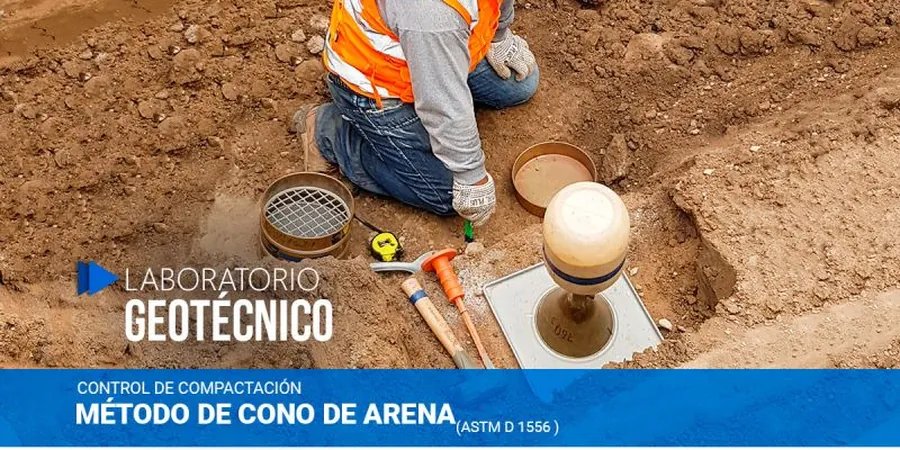
Field Density Testing (Sand Cone Method) for Christchurch Construction Sites

Sound ground. Sound decisions.

LEARN MORE

The difference between a build in Addington and one up in Cashmere comes down to more than just the view. While the loess-covered slopes of the Port Hills demand careful cut-and-fill placement, the flatland suburbs east of Hagley Park sit atop young alluvial deposits and post-quake remediated ground, where density is everything. Our field team has run sand cone tests on everything from TC3 residential pads in Wainoni to large-scale commercial fills near the central city. The sand cone method remains the most direct way to verify compaction on site, giving you a number you can trust before the concrete goes down. For deeper stratigraphic profiling, we often pair the density results with a CPT test to see how the fill ties into the natural silts and sands beneath Christchurch.

In Christchurch, a passing field density test is your first line of defense against differential settlement on post-quake ground; a failed test is a cheap problem compared to a cracked slab.
Our service areas

Methodology and scope

Christchurch’s rebuild after the 2010-2011 Canterbury earthquake sequence reshaped how the industry thinks about ground improvement and fill control. Thousands of properties were re-levelled with imported granular fill, and every layer had to pass a nuclear or sand cone density test before sign-off. The sand cone method, standardised under ASTM D1556 and referenced in NZS 4404:2010 for earthworks, remains the referee when nuclear gauge readings need calibration or when testing in trenches and around utilities where the gauge geometry fails. In our experience, the city’s typical clean alluvial gravels from the Waimakariri fan drain fast and compact predictably, but the interbedded silts in areas like Bexley or Southshore require a much tighter moisture control. If the lab curve for a borrow source isn't matching field readings, we recommend running a full Proctor suite to recalibrate the reference maximum dry density before rejecting an entire lift.
Field Density Testing (Sand Cone Method) for Christchurch Construction Sites
Technical reference — Christchurch

Local considerations

A crew laying service trenches along Ferry Road hit a patch of what looked like clean fine sand, compacted it with a trench roller, and called for a test. The sand cone came back at 91% of the modified maximum, well below the 95% spec. The problem wasn't the effort; it was the moisture. Christchurch's shallow groundwater, especially in winter, pushes moisture content up into the fill, and the same compactive effort on wet silty sand just bounces off the pore water. Opening the trench again to scarify, aerate, and recompact cost three days but prevented a sunken trench pavement that would have failed within the first six months of traffic. On residential slabs in the eastern suburbs, we frequently see the failure mode where localized soft spots, undetected because density tests were skipped to save a few hundred dollars, cause the polished concrete floor to crack along a straight line right above the trench backfill.

Need a geotechnical assessment?

Reply within 24h.

Email: contact@geotechnical-engineering1.co

Applicable standards

NZS 4404:2010 (Land development and subdivision infrastructure), ASTM D1556-15 (Standard Test Method for Density of Soil in Place by the Sand-Cone Method), NZGS Guideline: Field Description of Soil and Rock, NZS 4203:1992 (General structural design and design loadings — compaction acceptance references)

Technical parameters

ParameterTypical value
Standard MethodASTM D1556-15 / NZS 4404:2010 Section 4
Test Depth RangeTypically 100-200 mm (single lift)
Base Plate RequirementRequired; matched to excavation diameter
Gradation SuitabilityMax particle size 1.5 in (38 mm); ideal for minus 20 mm fills
Sand CalibrationOttawa 20-30 sand; bulk density calibration prior to each job
Reporting StandardRelative compaction (%) vs NZS 4404 Table 4.1 thresholds
Typical Pass Criterion≥95% modified Proctor for structural fill in TC2/TC3 zones

Frequently asked questions

How much does a field density test (sand cone) cost in Christchurch?

For a standard sand cone test with a written report and calibration traceability, budget between NZ$190 and NZ$210 per test. The rate drops when we perform multiple tests on the same site in one mobilization. We always recommend a minimum of three tests for a standard residential foundation fill to get a representative picture of the compaction.

When is the sand cone method preferred over a nuclear density gauge in Christchurch?

The sand cone method is the go-to on Christchurch sites where trenching is narrow, where electrical conduits or reinforcing steel create interference for a nuclear gauge, or when the contract specification explicitly requires a volumetric method. It is also the required correlation baseline for any nuclear gauge operating under a radiation safety plan in New Zealand.

What is the acceptable relative compaction percentage for residential fill in Christchurch?

Under NZS 4404:2010, structural fill beneath residential slabs in Christchurch typically needs to achieve a minimum of 95% of the standard Proctor maximum dry density, though modified Proctor targets are common in TC3 land. The exact threshold depends on the specific MBIE guidance and the geotechnical completion report conditions for your lot.

Can you perform a sand cone test in gravelly Christchurch soils?

The ASTM D1556 sand cone method works well in the sandy and fine gravel fills common across the Canterbury plains, but it has a practical limit around a maximum particle size of 38 mm. If the fill contains larger cobbles, we switch to a water replacement method or use a large-scale field density ring. Our team assesses the gradation visually before setting the base plate.

Location and service area

We serve projects across Christchurch and its metropolitan area.

View larger map