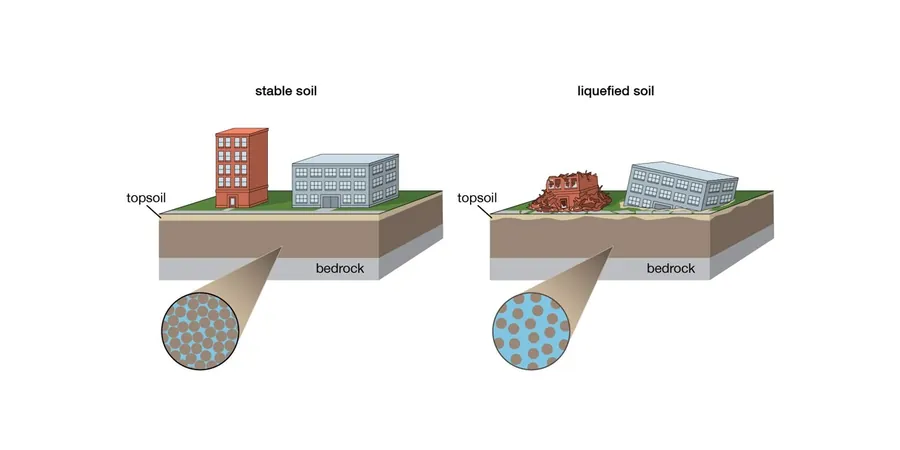
Ground conditions vary sharply across Christchurch. A site in Riccarton on dense gravels behaves nothing like a section in Bexley or the eastern suburbs where shallow groundwater and loose silts dominate. The 2010–2011 Canterbury earthquake sequence rewrote the rulebook. Liquefaction ejected over 400,000 tonnes of silt across residential land. Today every new build, subdivision, or retaining structure requires a defensible assessment. We run site-specific soil liquefaction analysis following the NZGS Module 4 framework. The data feeds directly into foundation design and consent documentation. Our engineers pair CPT triggers with laboratory cyclic testing where needed. Cone penetration testing gives continuous resistance profiles without disturbing the sample. We cross-check against seismic microzonation maps published by Environment Canterbury to ensure nothing is missed.
Christchurch silts trigger liquefaction at PGA values as low as 0.10 g. A CPT-only assessment backed by lab cyclic testing removes the guesswork.