GEOTECHNICAL ENGINEERING1
CHRISTCHURCH
HomeSlopes & WallsRetaining wall design

Retaining Wall Design in Christchurch: Stability That Works With the Land

Sound ground. Sound decisions.

LEARN MORE

Christchurch sits at -43.531 degrees latitude, where the ground still carries the memory of the 2011 quake. Over 10,000 aftershocks have reshaped how we think about soil pressure and lateral loads. Retaining wall design here is not a standard exercise pulled from a manual. It requires understanding liquefiable layers, variable water tables, and the Port Hills loess-colluvium interface that behaves differently than the alluvial gravels on the flat. The team combines field data with seismic refraction profiles where slope geometry is uncertain and CPT testing when soft layers need precise identification. Every design starts with the site, not the other way around.

A retaining wall is only as reliable as the drainage system behind it—ignore groundwater, and the best concrete will tilt within three wet seasons.
Our service areas

Methodology and scope

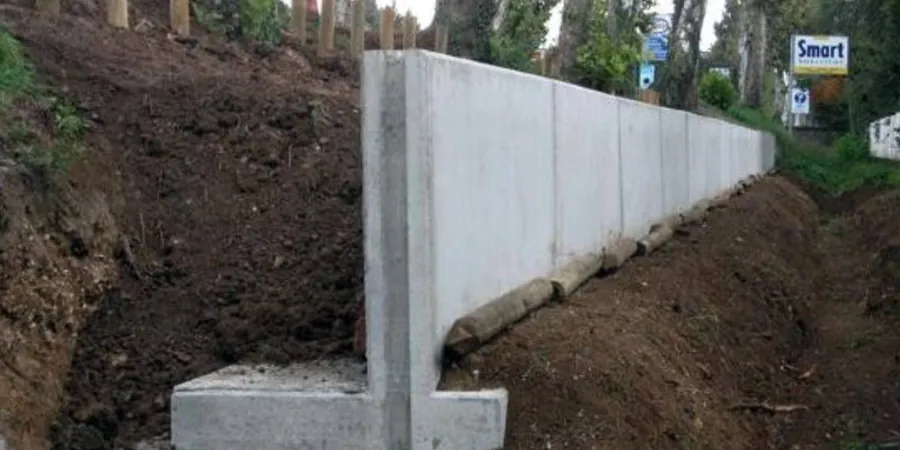
The contrast between the coastal sand-silt sequences east of Fitzgerald Avenue and the volcanic-derived soils toward Lyttelton creates real design challenges. Retaining walls in Christchurch must handle both static and seismic loads under NZS 3404, but the local groundwater regime often dictates the final reinforcement schedule. A dry theoretical design fails the moment winter raises the water table behind a wall. Our approach integrates subsurface drainage modeling with limit equilibrium analysis, ensuring the structure works in the conditions it will actually face. The technical process includes selecting appropriate backfill, designing weep holes or strip drains, and verifying global stability using Spencer’s method. For taller walls near property boundaries, we factor in surcharge loads from adjacent structures and confirm bearing capacity beneath the foundation.
Retaining Wall Design in Christchurch: Stability That Works With the Land
Technical reference — Christchurch

Local considerations

The most expensive mistake we see in Canterbury is treating a retaining wall as a standalone structure rather than part of a slope system. A contractor builds a 1.8 m gravity wall, backfills with silty site spoil, and three winters later the whole assembly has rotated outward by 50 mm. The wall did not fail structurally—the global slope crept around it. Christchurch’s residual loess soils lose suction under prolonged rainfall, reducing effective stress to near zero. Without a global stability analysis and proper drainage, the wall becomes a rigid inclusion in a slowly moving mass. Remediation costs triple the original installation, and often requires anchors or soil nails that should have been part of the initial design. The engineering fee for a thorough retaining wall design is negligible compared to rebuilding after a slide.

Need a geotechnical assessment?

Reply within 24h.

Email: contact@geotechnical-engineering1.co

Applicable standards

NZS 3404: Steel Structures Standard, NZS 4203: General Structural Design and Design Loadings for Buildings, NZS 1170.5: Structural Design Actions – Earthquake Actions, NZGS Guidelines for Retaining Wall Design

Technical parameters

ParameterTypical value
Design standardNZS 3404, NZS 4203, NZGS guidelines
Seismic hazard considerationSite-specific spectra per NZS 1170.5
Soil parametersFriction angle, cohesion, unit weight from site investigation
Groundwater modelingSeasonal high water table, pore pressure ratio (ru)
Drainage specificationStrip drains, weep holes, geocomposite drainage layers
Global stability checkSpencer or Morgenstern-Price method
Backfill requirementsFree-draining granular, compacted in lifts

Frequently asked questions

What retaining wall heights trigger a building consent in Christchurch?

Under the Building Act, any retaining wall supporting a surcharge (such as a driveway or building) or exceeding 1.5 m in height generally requires a building consent. Christchurch City Council may also require producer statements (PS1 design, PS4 construction review) given the region’s seismic risk profile. Always confirm with your project engineer early.

How much does a retaining wall design typically cost in Christchurch?

The design fee varies with wall height, site access, and subsurface complexity. For a straightforward residential wall, design packages generally range from NZ$1,640 to NZ$6,540, depending on whether the scope includes just the structural calculations or also the full site investigation, drainage plan, and construction monitoring.

Can you design a wall on a liquefaction-prone site?

Yes—this is a core competence for Christchurch projects. We incorporate liquefaction-induced lateral spreading loads where applicable, using NZGS-modelled residual strengths. The design may include ground improvement elements like stone columns beneath the wall foundation or deeper embedment to reach non-liquefiable strata.

Location and service area

We serve projects across Christchurch and its metropolitan area.

View larger map