GEOTECHNICAL ENGINEERING1
CHRISTCHURCH
HomeGeophysicsSeismic tomography (refraction/reflection)

Seismic Refraction and Reflection Tomography for Christchurch Sites

Sound ground. Sound decisions.

LEARN MORE

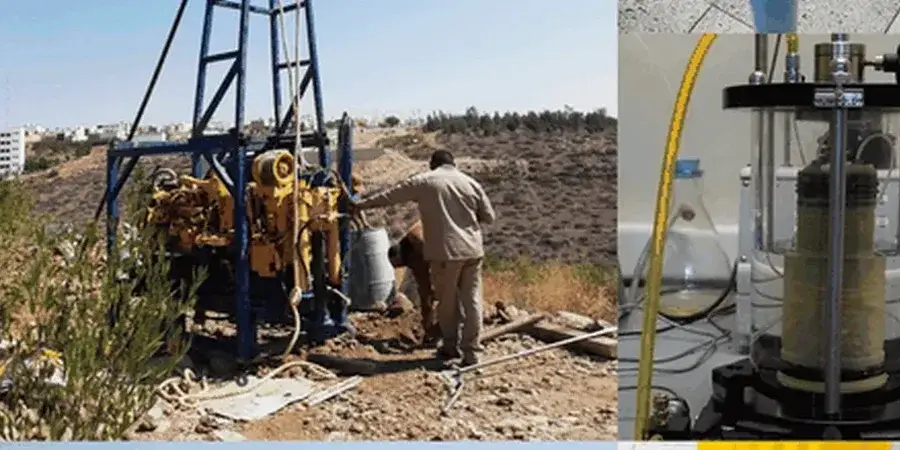
The yellow 48-channel ABEM Terraloc Pro 2 seismograph with its orange cable spread is a familiar sight on Christchurch pads from Bromley to Halswell. We deploy 24 to 48 vertical geophones at 2 to 5-metre spacing, depending on the target depth, and trigger a 10-kg sledgehammer or a Betsy Seisgun at multiple shot points along the line. The data streams into a field laptop running ZondST2D, where first-break picking begins within minutes. Christchurch’s subsurface—loose fluvial gravels overlying Riccarton Gravel, interbedded with estuarine silts and the rigid Bromley Formation—demands both refraction and reflection processing to separate the shallow velocity inversions that a simple MASW survey would smooth over. On a recent Avonside project, the refraction tomography clearly mapped a buried peat channel at 6 m depth that had been missed by four CPT soundings spaced only 15 m apart. The crew runs two to four lines per day, with preliminary velocity sections delivered to the project engineer by close of business. This is not generic geophysics—it is a method tuned specifically for the velocity contrasts of the Canterbury Plains, calibrated against the liquefaction triggering analyses required under the Christchurch District Plan post-2011.

A 2D tomography line costs less than two additional boreholes and reveals the continuity of soft layers that point data will always miss.
Our service areas

Methodology and scope

A recurring mistake we see on Christchurch rebuilds is relying solely on CPT or borehole logs to define the top of the Riccarton Gravel—and then being surprised by a soft interbed that shows up during excavation. Seismic tomography catches these lateral velocity variations because it images a continuous 2D section rather than a point measurement. The data acquisition follows NZS 3404 and the NZGS guidelines for seismic site classification, with each shot gather stacked three to five times to suppress the tram and traffic noise that plagues inner-city sites. Processing includes iterative ray-tracing tomography with topographic correction, and we routinely extract P-wave velocity cross-sections that resolve layers as thin as 0.5 m at depths of 30 m. For reflection work, the common-midpoint gathers are processed through NMO correction and CDP stacking to map the impedance contrast at the gravel-bedrock interface. The deliverables are not just colour contour plots; we provide rippability classification according to the Caterpillar D10R/D11R charts, Poisson’s ratio estimates from joint P- and S-wave refraction, and a table of Vp/Vs ratios that feeds directly into soil-structure interaction models. The entire workflow—from shot geometry design to final report—is managed by a Chartered Professional Engineer with specific experience in Canterbury basin stratigraphy, and the laboratory is IANZ-accredited to ISO 17025 for the velocity calibration of the seismograph timing circuits.
Seismic Refraction and Reflection Tomography for Christchurch Sites
Technical reference — Christchurch

Local considerations

Christchurch’s hydrology turns a routine seismic survey into a timing-critical operation. The unconfined aquifer beneath the city sits at just 1.5 to 3 m below ground level, and the fine-grained spring deposits in areas like Travis Wetland and the lower Avon corridor are fully saturated year-round. P-wave velocity in water is 1500 m/s—exactly the range of loose saturated silts—which makes it impossible to distinguish a liquefiable silt from a stiff clay using P-wave refraction alone. We overcome this by recording horizontal-component geophones to capture S-wave refraction simultaneously, and the Vp/Vs ratio becomes the diagnostic parameter. A ratio above 4.0 is a reliable indicator of saturated loose material in the Christchurch context, and we have correlated this threshold against 120 post-earthquake CPT-based liquefaction assessments across the city. The other local factor is the microseismic noise from the Port Hills rockfall netting operations and the constant heavy-truck traffic on Brougham Street; we schedule urban surveys between 5:30 and 7:00 AM to keep the noise floor below 0.05 mm/s. Every tomography report we issue includes a section on data-quality indicators—signal-to-noise ratio per shot, RMS travel-time residuals, and ray coverage density—so the structural engineer can assess the reliability of the velocity model before plugging it into a site-response analysis.

Need a geotechnical assessment?

Reply within 24h.

Email: contact@geotechnical-engineering1.co

Explanatory video

Applicable standards

NZS 3404:1997 – Steel Structures (seismic provisions for site classification), NZS 4203:1992 – General Structural Design and Design Loadings (seismic zone factors), NZGS Guidelines – Module 1: Seismic Site Classification (Vₛ₃₀ derivation from geophysics), ASTM D5777-18 – Standard Guide for Seismic Refraction, ISO 17025 (IANZ-accredited) – Seismograph timing calibration

Technical parameters

ParameterTypical value
SeismographABEM Terraloc Pro 2, 48 channels, 24-bit A/D
Geophone frequency4.5 Hz to 14 Hz vertical-component, depending on target depth
Source type10 kg sledgehammer or Betsy Seisgun (12-gauge blank)
Typical line length46 m to 115 m for refraction, up to 230 m for reflection
Maximum imaging depth30–40 m with sledgehammer, 60+ m with weight drop
Processing softwareZondST2D, SeisImager/2D, ReflexW
Deliverables2D P-wave and S-wave velocity sections, rippability log, Vp/Vs ratio plots

Frequently asked questions

What is the typical cost of a seismic tomography survey in Christchurch?

For a standard 2-line refraction survey with 48-channel spread and sledgehammer source, budgets in the Christchurch market run from NZ$4,830 to NZ$9,600 depending on line length, access constraints, and whether both P-wave and S-wave recording are required. Inner-city sites with restricted working hours or high traffic-noise conditions tend toward the upper end. Each quote includes shot geometry design, field acquisition with a 2-person crew, full tomographic inversion, and a signed CPEng report.

How deep can seismic refraction and reflection see in Christchurch gravels?

With a 115-metre spread and a 10-kg sledgehammer, we routinely image to 25–30 m in the Riccarton Gravel. In the Bromley Formation volcanics, where velocities exceed 2000 m/s at shallow depth, the penetration reduces to about 15–20 m. For deeper targets—like mapping the top of the basement greywacke at 50+ m—we use a trailer-mounted accelerated weight drop that increases the source energy by a factor of 20 compared to a sledgehammer. Reflection processing can extend the depth of investigation further by stacking CDP gathers, but the resolution at the gravel-bedrock interface is typically ±1 m vertically.

Can seismic tomography replace boreholes for Christchurch foundation design?

Seismic tomography complements boreholes but does not replace them. The velocity section gives you continuous lateral coverage and catches low-velocity zones between borehole locations, but you still need at least one calibration borehole to tie velocity to a known lithology—especially in Christchurch where saturated loose sand and soft clay can share the same P-wave velocity. The most cost-effective approach we recommend is one borehole plus two intersecting tomography lines, which typically reduces the total number of boreholes by 30–40% while improving the geological model confidence.

Location and service area

We serve projects across Christchurch and its metropolitan area.

View larger map